
A New World Romance, originally written in Hindi by Susham Bedi as ‘Nava Bhum ki Ras- Katha’, and translated into English by Astri Ghosh, is a powerful meditation on love and identity. It follows the story of two academics, Ketaki and Aditya, whose accidental meeting at a seminar soon leaves them entangled in the delicate threads of love. Based in the United States, or as the author calls it, the ‘New World’ (Navabhum), the two have long left behind the ‘Old World’ (Purabham), but as they begin to navigate life anchored in both love and academia, they come to realise that while the new world brims with possibilities, the shadow of the old world continues to linger.
From the very onset, the novel presents itself as the story of two people, and throughout, the readers hardly meet any character other than Ketaki, and Aditya. It is their story, of the first stirrings of love, the yearning they feel for one another, the intellectual intimacy they seek, their desires, and their longings, and equally, of their shortcomings, frustrations and anxieties.
The story begins when the two arrive to attend an academic seminar, waiting in line at the hotel, only a fleeting glance passing between them. As Ketaki’s hotel reservation falls through, Aditya, standing right behind her in the queue, suggests that she take up his room for the night while he looks for lodging at a colleague’s. However, even before the night settles, the two find themselves attending presentations together, discussing books, and forming the intellectual connection that sets their story in motion. Aditya, unable to find a plausible stay for the night, is compelled to share the room with Ketaki, and within that charged space teeming with the prospect of their union, the first seeds of love begin to flourish between the two.

Bedi’s choice of characters is striking, she does not explore love through the lens of youthful passion, but places it in the lives of two individuals who are well-established in their professions, are seasoned by experience, and marked by previous relationships. They are mature, yet they feel the same nervous excitement of love; independent, yet vulnerable to the fears and hesitations of intimacy; free of parental or societal control, yet as individuals with firmly formed identities, prone to the struggle that love comes to posit.
The form of the novel in itself is unconventional, with most of the narrative unfolding in a conversational tone. The story moves forward primarily through Aditya and Ketaki’s exchanges, on phone, by fax, and through their meetings; dialogue becoming the central vehicle of action in the story. Ghosh, in her translation, captures it by not only carrying across Bedi’s words, but also by translating the very states of mind that animate the characters. The innocent joys of their blooming love, Ketaki’s quiet hesitations, and Aditya’s mounting frustrations—all come through vividly in her translation.
In the ‘New World’, free from the old barriers of caste, creed, or age, love still remains entangled in the psychic constraints each of us carries within. While Aditya longs to map the distance between them, Ketaki remains uncertain of giving herself in to the ‘domestic romance’ that he so ardently desires. For Aditya, love demands commitment, and for Ketaki, love is as free and untethered as a feather. Neither can escape the weight of inherited anxieties, their psyche as much shaped by their personal histories as their present romance. Ketaki, scarred by a stifling marriage that once left her trapped within the domestic sphere, and Aditya, haunted by the absence of love from those he cherished, find themselves bound in the fetters of their own expectations and vulnerabilities.
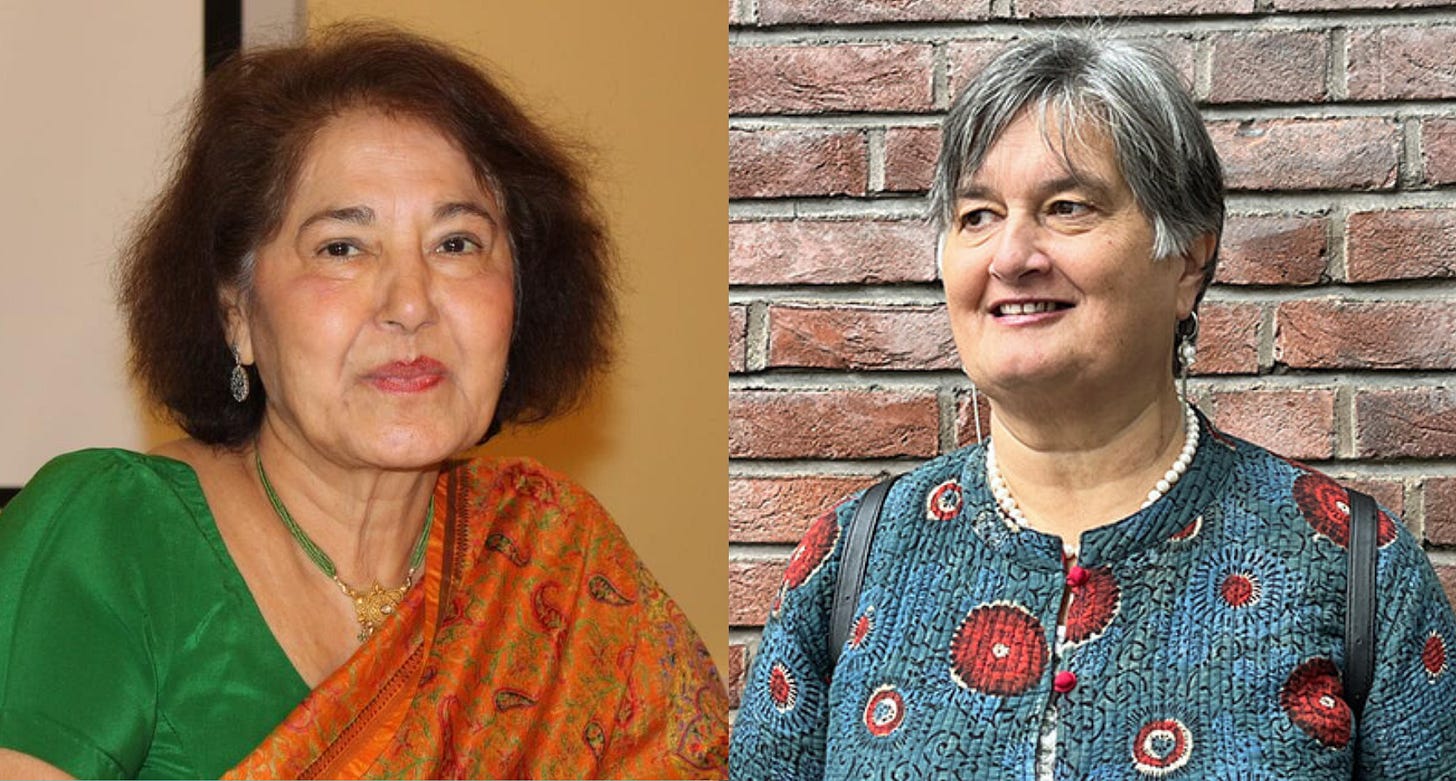
Bedi’s characters embody a dual existence, belonging both to Purabhum and Navabhum. Even while living in the New World, they cannot fully shed the imprint of the Old, their identities are shaped by the constant tussle between the two worlds, between origin and reinvention. This in-betweenness is mirrored in the narrative voice itself. The narrator, in the prologue, nearly identifies herself with Susham Bedi, aligning closely with the protagonists by reaffirming her own position as a hybrid writer, rooted in both the Old and the New World. Astri Ghosh, with her own mixed heritage, born to a Norwegian mother and an Indian father, embodies a similar in-betweenness, and this cultural fluency informs Bedi’s narrative and Ghosh’s translation, lending it both empathy and authenticity.
Ghosh’s translation lends the novel an added richness through her sensitivity to the language as she preserves several Hindi words, like “gulmohar”, “gulab”, “banphule”, “kurta pyjama”, while also frequently alluding to the figures of Radha, Krishna, Hatim Tai, Shakuntala, hence allowing the text to breathe in its own cultural context. Further, her choice to keep ghazals and lyrical passages in the original, followed by their translations, also contributes to the novel’s emotional resonance, and renders it a distinct lyrical charge.
Bedi’s novel however, resists the urge to resolve the contradictions it so carefully sets up, and Ghosh’s translation renders it with the intellectual sensibility that seems both natural and evocative. As Aditya and Ketaki fail to find a way to live together, their bond almost collapsing, the novel offers no easy resolution to their conflicts. Yet, aware that love in the New World is never simple, the narrator does not end the narrative in their parting. Instead, the epilogue leaves the conclusion open, inviting the readers to imagine an ending that resonates with their own sensibilities. This ambiguity propels the readers to sit with the same questions that haunt Ketaki and Aditya, whether love demands surrender, or whether true love lies in retaining one’s selfhood and rising through it.
About the Author:
Iqra Shamim is a literature enthusiast who graduated from St. Stephen’s College and did MA in English from Delhi University (2024). She is currently an intern for AfterWord. Passionate about translation, she has a deep appreciation for the lyrical elegance of Urdu poetry and the vast literary traditions of English literature. When translating, she finds inspiration in the timeless verses of classical and contemporary writers.